
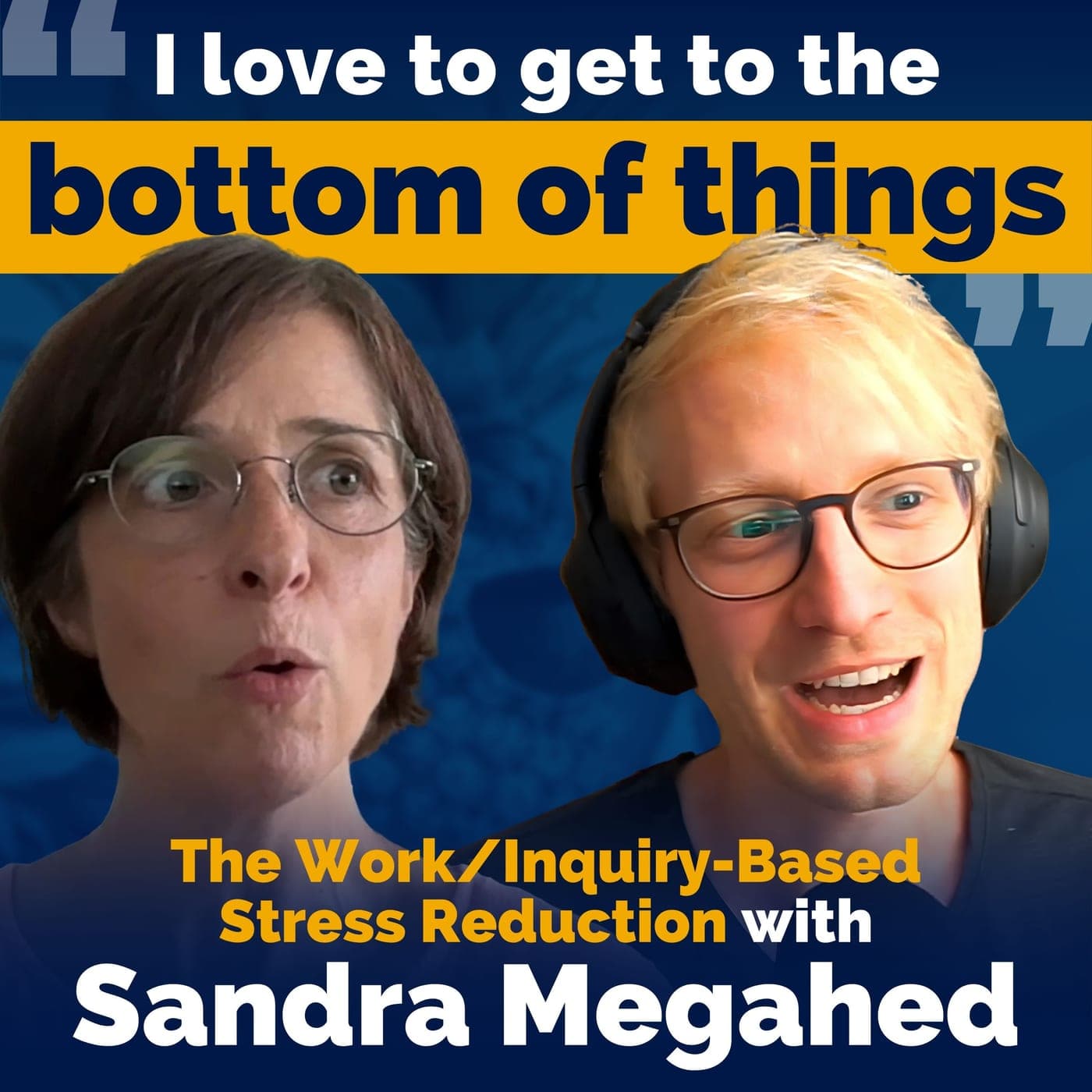
Positive Neuroplasticity with Sandra Megahed
with Sandra Megahed, Coach and facilitator for entrepreneurs and leaders
Show notes
A coaching podcast with Sandra Megahed and Tobias Weghorn exploring positive neuroplasticity and how to “take in the good” when your brain keeps looping on what went wrong. Building on the episode’s opening reflections on negativity bias, Sandra shares how coaches can help clients (and themselves) shift focus without denying real-world challenges. You’ll hear a practical map of the safety, satisfaction, connection core needs and how they relate to the green zone vs red zone, plus a simple way to switch gears back to a more responsive state. Sandra also walks Tobi through the Rick Hanson HEAL method and explains why repetition can literally change what the brain defaults to over time.
Key Learnings:
- Use positive neuroplasticity as a quick reset: identify one “good enough” moment in the client’s day, then guide them through Have It → Enrich It (2–3 breaths) → Absorb It so it’s more likely to stick than the negativity bias.
- Coach with the safety, satisfaction, connection core needs: when a client is in the red zone, name which need is unmet and pick a matching resource (body/world/mind) to return toward the green zone vs red zone.
- Apply the Rick Hanson HEAL method in sessions: start from a real resource memory (calm, trust, being cared for), amplify it with sensory detail, and only then lightly link it to the stressful trigger (optional) to reduce reactivity over time.
Resources:
- Hardwiring Happiness (Rick Hanson): https://www.rickhanson.net/hardwiring-happiness/
- Find your Coaching Tool: https://metaFox.eu
- Try the metaFox Strengths Discovery: https://strengths-discovery.com
- Connect with Tobi on LinkedIn: https://linkedin.com/in/tobiasweghorn
Episode Chapters:
00:00 How Your Brain “Takes Its Shape” From What You Feed It
01:00 Why Positive Neuroplasticity (Taking In The Good) Matters for Coaches
05:12 Negativity Bias and the Case for Rewiring Attention
09:00 Safety, Satisfaction, Connection Core Needs (Framework Overview)
13:10 Green Zone vs Red Zone: Reactive vs Responsive States
16:00 Micro-Connection Practices in Everyday Life (Dentist, Cashier, Small Moments)
18:10 Using Red Zone Intentionally (Competition, Tunnel Vision) Without Getting Stuck
22:00 Blue Mind, Water Retreats, and the Vagus Nerve Diving Reflex
27:40 Taking In The Good vs the Rick Hanson HEAL Method
28:50 Live HEAL Coaching Demo (Have, Enrich, Absorb, Optional Link)
45:30 Let Be, Let Go, Let In: A Simple Daily Practice for Coaches and Clients
Further resources
Transcript
Full transcript, edited for readability. Every timestamp jumps the video to that moment.
Sandra Megahed: Imagine you watch five or six hours of news a day, which is mostly bad news. Then it does something to you. Even at the dentist last week, I relaxed there. I enjoyed it. I had pain, but I thought, "Oh, they care for me," and this caring feeling is so good for us. So our brain is changing, and it's changing according to what it perceives, what it experiences, and how we process it. So it takes its shape from what it rests upon. Tobi: Have you ever had a day with maybe three good client conversations, but then at night, lying in bed, there's still that one critical email that's stuck in your mind? In my training as a coach, no matter if it was NLP or learning about constructivism, I learned the same thing again and again: my world, or my reality, is really shaped by how I perceive it, by where my focus is. And today's guest works with exactly that. Sandra Megahed is back on the show. Last time she took me through The Work of Byron Katie, and this time she shares an approach by the psychologist Rick Hanson called Taking In The Good, or Positive Neuroplasticity. Before becoming a coach, Sandra was a journalist, and I think that still shows in the depth and the richness with which she shares her methodologies. Today we talk about the three core needs of humans: safety, satisfaction, and connection, and how having those met or not met brings us into a green zone or a red zone, and how we can switch gears between the two. Sandra also shares what happens during her mini retreats in the water, and she leads me through a HEAL exercise by Rick Hanson. So if you want to help your clients notice what is already good in their lives, or maybe bring this focus shifting into your own life, then let's get into what we call Taking In The Good, or Positive Neuroplasticity. Welcome, Sandra. Can you explain the idea behind it to us? Sandra Megahed: Thank you for the invitation, Tobi. As you said, it's called positive neuroplasticity training. The approach is Taking In The Good. So you can already imagine it's more about becoming more aware in your life of the possibilities and the resources instead of the challenges. And the key thought is that we are prone to underestimate our resources and overestimate the challenges, right? It helps us learn to consciously take in beneficial moments and experiences in our life. That's why it's also called self-determined, experience-based neuroplasticity. And neuroplasticity is what happens all the time, especially when we're learning. Our brain is changing, and it's changing according to what it perceives, what it experiences, and how we process it. So it takes its shape from what it rests upon, says Rick Hanson. Imagine you watch five or six hours of news a day, which is mostly bad news. Then it does something to you. You're in a mood, and then you go out and you're not like, "Oh, yeah, everything will be fine today," when you hear about inflation, rising prices, wars, and all these things. And it's not about denying what happens in the world or what happens inside you. It's about also seeing the reality, seeing the facts, on the negative and also on the positive side. And when I go through my life with this kind of realistic thinking, then I'm also more open to the good facts in my life. It's really about looking for facts, for opportunities in our daily life, and taking them in and slowing down every time I do this. I just slow down and enjoy it, like a favorite song I'm listening to, my favorite meal, or the time with my kids or best friends, for example. This is what we do naturally, but here we do it consciously and deliberately, especially when we have challenges. Then we know, and this is what we will learn today, how to find the resources, the moments that really match my challenge.
Read the full transcriptRelated episodes


Becoming Present and What Coaches Learn from the Indian Scriptures with Yatish Chandrasekhar
Yatish Chandrasekhar ·