Team Coaching Insights with Nathalie McAree
with Nathalie McAree, Executive and team coach (PCC, ACTC), founder of NEM Coaching
Show notes
A coaching podcast with Nathalie McAree and Tobias Weghorn about team coaching and why even “friendly” teams can avoid the conversations that matter. Building on Nathalie’s “Cozy Club” story, they unpack the difference between comfort and psychological safety in teams—and why teams often realize they should’ve gotten in the room together sooner. Nathalie shares how she uses team 360 feedback and one-on-one stakeholder interviews before the team even meets, then uses formats like the fishbowl technique to help teams talk about what they’ve been skirting around. A practical listen if you want to learn coaching approaches that make team dynamics visible without making it all about the coach.
Key Learnings:
- In team coaching, separate “cozy” from psychological safety in teams: build enough trust, then trade it (don’t bank it) to surface real differences and make better decisions.
- Use team 360 feedback plus one-on-one stakeholder interviews to spot misalignment early (inside the team and with stakeholders), then let the team choose what to own and change.
- When you or the team gets triggered, treat it as data: pause, name it internally, shift to curiosity and self-compassion, and use the insight to improve how the team has the hard conversations.
Resources:
- Find your Coaching Tool: https://metaFox.eu
- Try the metaFox Strengths Discovery: https://strengths-discovery.com
- Connect with Tobi on LinkedIn: https://linkedin.com/in/tobiasweghorn
Episode Chapters:
00:00 The Client Is the Team (And They Decide What’s Valuable)
01:00 The “Cozy Club” Story: Friendly Team, Different Realities
03:00 Why Teams Don’t Prioritize Getting in the Room Together
06:00 Psychological Safety in Teams: Trade It, Don’t Bank It
11:00 Triggers in Team Coaching: Turn Reaction Into Data
19:00 Identity and Feeling Exposed in Front of a Team
21:00 Team 360 Feedback + One-on-One Stakeholder Interviews (Before Session 1)
33:00 What Happens in the Room: Sharing Data and Naming the Elephants
38:00 Fishbowl Technique to Have the Conversations Teams Avoid
45:00 Letting Go of the “Clean Ending”: It’s Not About the Coach
Further resources
Transcript
Full transcript, edited for readability. Every timestamp jumps the video to that moment.
Nathalie McAree: It's not for me to decide if something has been valuable or not. The client decides. The client is the team, and they will decide on the value of something. And just because it hasn't met my expectation of being able to be finished off with a bow doesn't mean that it isn't valuable or hasn't been hugely valuable. So that was really helpful learning for me to have. One of my fantastic colleagues often helps me by telling me, "Nathalie, it's not all about you." And I think sometimes we can make it about ourselves, with our insecurities and whatever else we're carrying around. And so much of the time, it's not about us. We can make it about us, but it's not about us. Tobi: My guest today has been a member of a team that she called the Cozy Club. Everybody was friendly with each other, there was little disagreement in meetings, and yet through a team coaching experience, she realized that all of them were living in different realities somehow. This experience was so powerful that now, 10 years later, Nathalie McAree is an executive and team coach based in London. For five years, she's been co-facilitating the community of practice for team coaching of the ICF UK, and after these team coaching engagements, her clients often tell her, "We should have gotten into this room together sooner." So in this episode, we unpack why that is. We talk about why close, friendly teams like Nathalie's 10 years ago may still avoid their most important conversations, how our and our clients' identity plays an even bigger role in team coaching, how Nathalie uses 360 and one-on-one interviews before the team even meets, and how, using a fishbowl technique, she then enables teams to have the conversations they have been avoiding. So if you've ever considered getting into team coaching, this one is for you. Let's go. Tobi: Today I'm super excited to continue our conversation about team coaching that we had, I guess it was last week. One thing that you said in our last conversation that really stuck with me is that clients from team coaching sometimes tell you, "We should have gotten in that room together with you sooner." And that made me wonder: what happens in team coaching that makes them say this?
Read the full transcriptRelated episodes
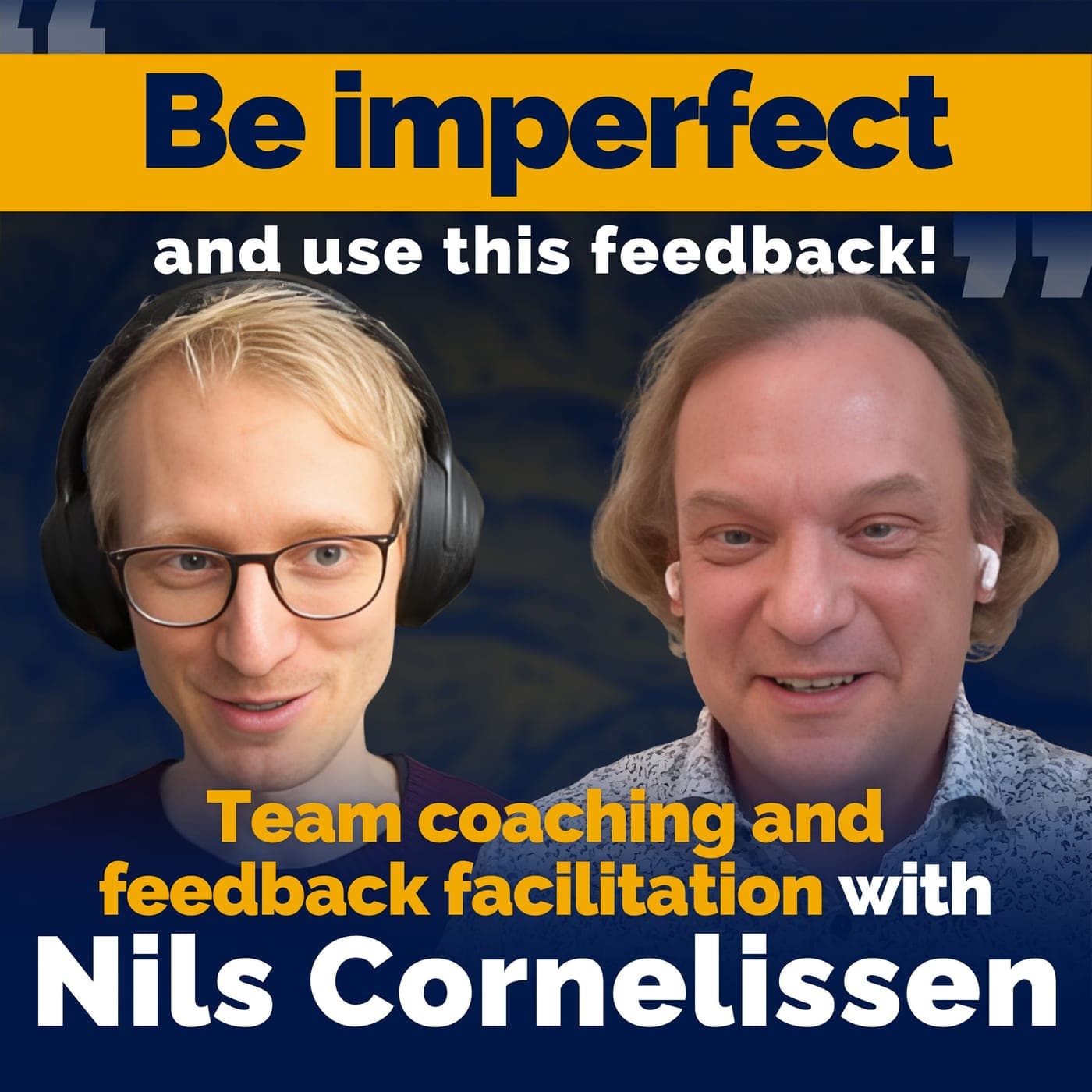
Facilitating Feedback and Psychological Safety in Team Coaching with Nils Cornelissen
Nils Cornelissen ·